Aluminum is usually the better choice when reducing installed equipment weight or avoiding red rust is a priority. Steel is often preferred when a technician wants traditional, rigid construction or a lower-cost option within a comparable product line. Neither material is automatically stronger, safer, or better for every work van or truck.
The correct decision should be based on the specifications of the exact shelving unit, partition, drawer, or rack—including its weight, load rating, finish, vehicle compatibility, warranty, and installation requirements. A well-designed aluminum product may equal the listed capacity of a comparable steel product, while two products made from the same material may have very different ratings.
Quick Answer: Aluminum or Steel?
Aluminum may be the better starting point when:
- Preserving more of the vehicle's available payload matters.
- The equipment will be exposed to water, road salt, or humid conditions.
- A component must be lifted, removed, or handled frequently.
- The fleet is intentionally reducing upfit weight.
Steel may be the better starting point when:
- A comparable steel model meets the required rating at a better price.
- The technician prefers steel construction for a fixed interior system.
- A desired product, accessory, or configuration is offered only in steel.
- The extra equipment weight fits comfortably within the vehicle's payload.
Many useful upfits combine both materials. Always compare complete product specifications rather than choosing from material alone.

What Is the Main Difference Between Aluminum and Steel Equipment?
Aluminum has a lower density than steel, so an aluminum component can often weigh less than a similarly sized steel component. That can leave more of the vehicle's rated payload available for technicians, tools, and materials. The actual weight difference depends on the product design, thickness, reinforcements, and other materials used in the assembly.
Aluminum does not develop red rust like untreated carbon steel. It can still oxidize or be affected by certain chemicals and dissimilar-metal contact, so it should not be described as maintenance-free or immune to every form of corrosion.
Steel equipment is generally heavier for a similar-sized design, but it can offer high rigidity and is widely used for commercial shelving, partitions, drawers, and truck racks. Commercial steel equipment commonly uses primer, paint, or powder coating to protect the surface. Damage to that finish should be addressed according to the manufacturer's care instructions.
How Do Aluminum and Steel Compare?
| Decision Factor | Aluminum Equipment | Steel Equipment |
|---|---|---|
| Equipment weight | Often lighter in a comparable product family | Often heavier in a comparable product family |
| Rust and corrosion | Does not form red rust, but is not immune to all corrosion | Depends heavily on coating condition and environment |
| Load capacity | Must be checked by exact model | Must be checked by exact model |
| Dents and impact | May dent more readily depending on the design and alloy | May resist denting better depending on gauge and design |
| Purchase price | Often higher, but pricing varies by product | Often lower, but pricing varies by product |
| Payload planning | Can reduce the weight assigned to the upfit | Requires accounting for greater equipment weight when applicable |
| Security | Depends on the enclosure, lock, mounting, and complete design | Depends on the enclosure, lock, mounting, and complete design |
| Best use | Weight-conscious or corrosion-sensitive applications | Cost-conscious or traditional heavy-duty applications |
This table describes common tendencies, not universal rules. The exact product specifications take priority over general statements about the material.
Does Aluminum Equipment Increase Vehicle Payload?
Lighter equipment does not change the vehicle manufacturer's payload rating. It can, however, consume less of that rating. If one complete upfit weighs 100 pounds less than another, those 100 pounds remain available for people, tools, materials, and other cargo—provided the vehicle stays within all applicable weight limits.
A payload calculation should include:
- The driver and passengers.
- Shelving, partitions, drawers, flooring, liners, and racks.
- Tools, parts, ladders, tanks, and materials.
- Accessories added after the initial installation.
- Cargo collected or purchased during a normal workday.
Do not assume that lighter equipment will produce a specific fuel or operating-cost reduction. Fuel use depends on total vehicle weight, powertrain, route, speed, idling, weather, tire condition, and driving behavior. Reduced upfit weight is measurable; promised fuel savings generally are not without vehicle-specific operating data.
Does Steel Always Have a Higher Load Capacity?
No. Material alone does not determine a product's capacity. The shape, alloy or steel grade, thickness, fasteners, reinforcements, mounting system, and complete product design all contribute to the final rating.
Ranger Design's current 60-inch N5 shelving provides a useful matched example. With the aluminum N5-RA60-4 and steel N5-RS60-4 with four shelves, they both have the same usable shelf depths, and a 250-pound weight-capacity listing. The aluminum model is listed at 75 pounds, while the steel model is listed at 88 pounds—a 13-pound difference for these two specific units.
| Verified Specification | Ranger N5-RA60-4 Aluminum | Ranger N5-RS60-4 Steel |
|---|---|---|
| Width and height | 60 in. wide × 62 in. high | 60 in. wide × 62 in. high |
| Number of shelves | Four | Four |
| Usable shelf depths | 12, 14, 14, and 14 in. | 12, 14, 14, and 14 in. |
| Listed product weight | 75 lb. | 88 lb. |
| Listed weight capacity | 250 lb. | 250 lb. |
| Shelf adjustment | One-inch increments | One-inch increments |
These figures apply only to the listed part numbers. Confirm whether a published capacity applies to each shelf, the complete unit, or another defined loading condition before placing cargo on the equipment.
View Ranger Design N5 Aluminum Shelving ?
View Ranger Design N5 Steel Shelving ?
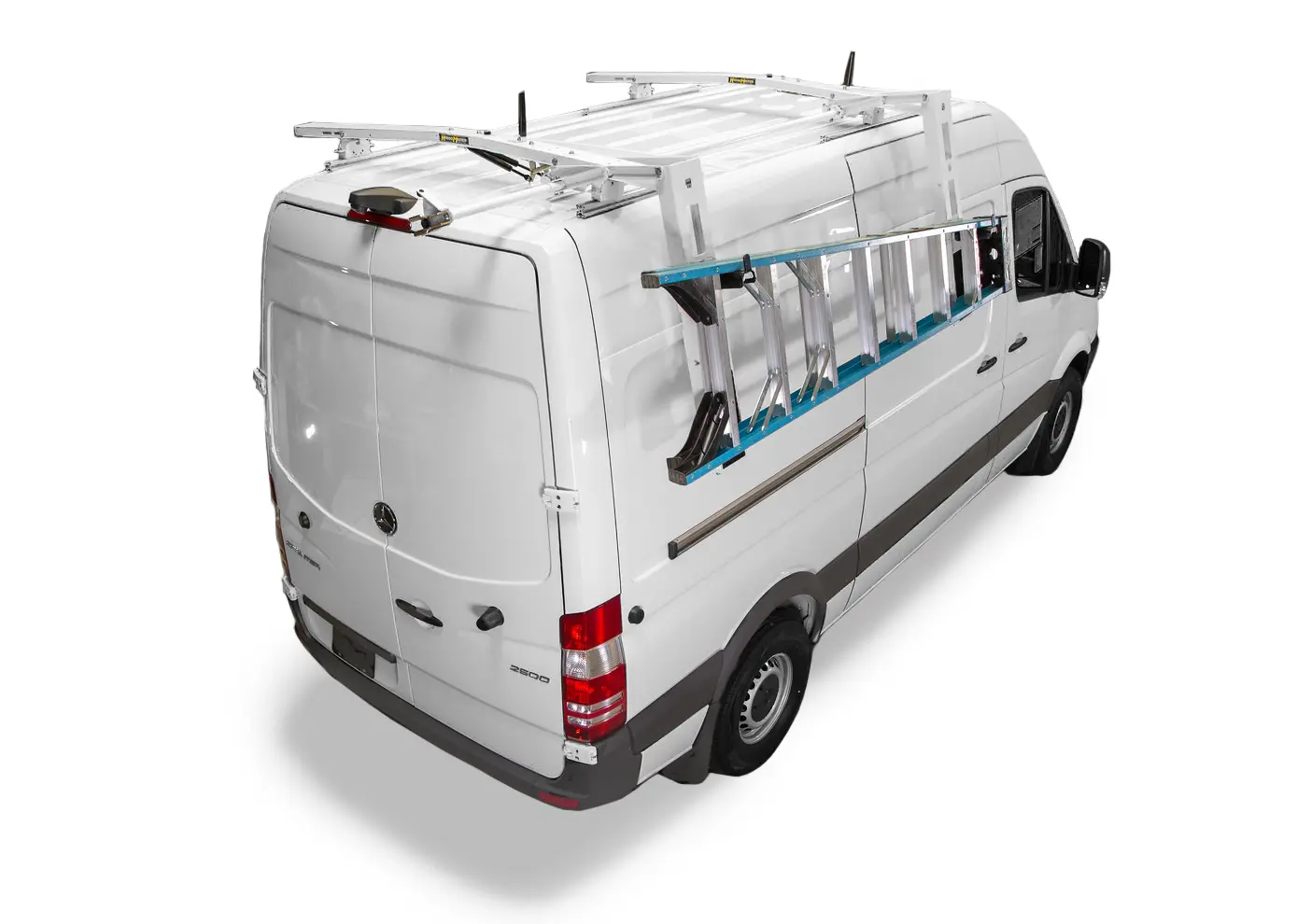
What About Aluminum vs. Steel Ladder Van and Truck Racks?
The same rule applies to racks: compare the complete product rather than assuming the material determines capacity. For example, The Holman's steel PRO III full-size truck rack and aluminum PRO IV adjustable truck rack have 1,000-pound capacities. They are different product families with different construction and fitment, so they should not be treated as interchangeable.
A rack's stated capacity may also be greater than the weight that the vehicle can safely carry overhead. The vehicle's payload, gross vehicle weight rating, axle ratings, roof or bed limits, cargo position, and the rack manufacturer's instructions must all be considered.

Aluminum can be helpful when a rack is handled or removed regularly and when reducing overhead equipment weight is important. Coated steel racks remain a practical option when their rating, price, fitment, and features better match the job.
Which Material Is Better for Different Trades?
Electricians and Telecom Installers
Electricians often carry many small parts, tool cases, wire, and testing equipment. Aluminum shelving can reduce installed weight, while steel drawers or lockers may provide the exact accessory layout the technician prefers. Either material can work when the capacity and organization match the inventory.
HVAC Technicians and Plumbers
Water, condensation, and certain jobsite chemicals can make corrosion resistance important. Aluminum shelving may be a useful starting point, but tank restraints, drawers, and other components should be selected by their specific rating and compatibility rather than material alone.
General Contractors and Mobile Service Technicians
These users may prioritize impact resistance, cost, adjustable storage, or the ability to carry bulky tools. A steel system may suit a permanent heavy-use layout, while aluminum can preserve payload for tools and materials. The best choice depends on what the van carries each day.
Fleet Operators
Fleets should compare the complete installed weight and cost across the planned number of vehicles. Standardizing shelf positions and accessories may be more valuable than using one material everywhere. A mixed-material specification can be appropriate when it produces a repeatable layout without exceeding payload targets.
When Is a Mixed-Material Upfit a Better Choice?
A van or truck does not need to use one material throughout. A typical configuration might use aluminum shelving to reduce wall-system weight, steel drawers for a desired cabinet design, a vehicle-specific partition, and an aluminum or steel rack selected by its capacity and fitment.
A mixed system can make sense when:
- One component is available only in the required material or size.
- Payload is important but the lightest option is not needed everywhere.
- The technician needs a specific drawer, door, or accessory system.
- Exterior corrosion exposure differs from the interior environment.
- The combination provides a better balance of cost and function.
When aluminum and steel components contact each other, use the supplied hardware and follow the manufacturer's installation instructions. Do not substitute fasteners or mounting methods without verification first.
Who May Not Benefit From Paying More for Aluminum?
Aluminum may not provide enough additional value when the vehicle has ample unused payload, the equipment stays in a dry interior, and a comparable coated-steel product meets the required capacity and workflow at a lower price.
Steel may not be the better value when its added weight forces the customer to reduce tools or materials, or when damaged coatings would be difficult to maintain in a wet or salt-exposed environment.
Compare the actual products and operating conditions. Avoid paying for a theoretical advantage that does not affect the way the vehicle will be used.
What Mistakes Should You Avoid?
Assuming Aluminum Is Only for Light-Duty Work
Properly designed aluminum equipment can carry substantial loads. Use the listed capacity for the exact product instead of judging it from the base material.
Assuming Steel Is Automatically Stronger
Steel has different material properties, but the finished product's geometry, thickness, mounting, and testing determine its usable rating.
Claiming Guaranteed Fuel Savings
A lighter upfit preserves payload and reduces vehicle mass, but the actual fuel-cost result depends on the vehicle and how it operates.
Ignoring the Protective Finish on Steel
Commercial steel equipment is often primed or powder-coated. Inspect and maintain that finish according to the manufacturer's guidance, especially after impacts or abrasion.
Buying Before Confirming Vehicle Fitment
Material does not determine compatibility. Confirm the year, make, model, wheelbase, roof height, bed length, cap or service-body configuration, and any required mounting kit before ordering.
Exceeding the Vehicle Limit Because the Equipment Has a Higher Rating
A shelf or rack rating does not override the vehicle's payload, axle, roof, bed, or gross-weight limits. The lowest applicable limit controls.
Frequently Asked Questions
Is Aluminum or Steel Better for Work Van Shelving?
Aluminum is often preferred when lower equipment weight or rust resistance matters. Steel may be preferred when a comparable steel unit offers the desired features or price. Compare the exact dimensions, weight, capacity, accessories, and vehicle application.
Does Aluminum Work Van Equipment Rust?
Aluminum does not develop the red rust associated with carbon steel, but it can oxidize or corrode under certain conditions. Follow the product manufacturer's care and installation instructions.
Is Steel Always Better for Heavy Tools?
No. The product's published rating determines whether it is suitable for the load. Some aluminum and steel products have the same listed capacity.
Will Aluminum Equipment Improve Fuel Economy?
A lighter upfit reduces the amount of vehicle capacity consumed by the equipment, but a specific fuel saving cannot be promised without operating data for that vehicle, route, payload, and driver.
Is Steel Equipment Less Expensive?
Steel is often less expensive within a comparable product family, but not always. Compare current prices for products with similar size, capacity, features, mounting hardware, and warranty coverage.
Can Aluminum and Steel Equipment Be Used in the Same Van?
Yes. Mixed-material upfits are possible when the components fit the vehicle and are installed according to their instructions. Use the correct mounting hardware, particularly where different metals contact each other.
Which Material Is More Secure Against Tool Theft?
Material alone does not determine security. Cabinet design, locks, hinges, fasteners, mounting, window protection, and vehicle-door security all contribute to the complete system.
What Vehicle Information Is Needed Before Ordering?
Provide the year, make, model, wheelbase, roof height, and relevant body, bed, cap, or door configuration. Exact compatibility should be confirmed for every product before ordering.
Need Help Comparing Aluminum and Steel Equipment?
Work Van Equipment can help compare shelving, partitions, drawers, ladder racks, truck racks, and accessories using the specifications that matter for the vehicle and the work being performed.
The best configuration may use aluminum, steel, or a combination of both. Before ordering, consider the vehicle, payload, cargo, environment, product rating, installation, and daily workflow.
Browse Van Equipment Browse Truck Racks Ask for Fitment Help
For assistance, provide the vehicle's year, make, model, wheelbase, roof height, and applicable bed, cap, body, or door configuration.
Tagged Products