Frequent stops, tight jobsites, repeated entry and exit, and unsecured equipment can create avoidable risks in a commercial van. For contractors, service technicians, small businesses, and fleets, a safer setup begins with three priorities: stable entry and exit, organized cargo, and equipment that matches the vehicle and daily workflow.
Practical upgrades may include grab handles, commercial shelving, ladder racks, van flooring, and purpose-built tank or cargo restraints. Not every van needs every product. The best configuration depends on the vehicle, trade, equipment carried, frequency of access, and applicable cargo-safety requirements.
Start by addressing the tasks that create the most repeated reaching, lifting, climbing, or cargo movement during the workday.

Quick Answer: Which Safety Upgrades Should You Consider?
| Technician Need | Equipment to Consider |
|---|---|
| More stable entry and exit | Grab handles and appropriate steps |
| Better organization for tools and parts | Commercial shelving, bins, and dividers |
| Removing ladders from the cargo area | Exterior ladder rack |
| Better traction and floor protection | Commercial van flooring |
| Securing tanks or cylinders | Application-specific tank racks or restraints |
These are starting points rather than a required package. Confirm product fitment, installation requirements, capacity, intended use, and applicable safety rules before ordering.
Why Should Work Van Safety Be a Priority?
Small problems inside a van can become repeated daily risks. A technician may climb into the cargo area dozens of times, reach around poorly placed equipment, or move unsecured tools after every stop.
Common concerns include:
- Slips or falls during entry, exit, loading, and unloading
- Strains caused by repeated awkward reaching, lifting, or climbing
- Tools or materials shifting while the vehicle is moving
- Damaged or misplaced equipment
- Lost time caused by disorganization and difficult access
A better-equipped van cannot eliminate every risk, but it can provide more consistent storage locations, clearer access paths, and equipment designed for commercial-vehicle use.
What Are the Benefits of a Better-Equipped Work Van?
A practical van layout may help a business:
- Reduce unnecessary reaching, climbing, and cargo handling
- Make frequently used tools easier to access
- Keep equipment separated and organized
- Preserve a clearer path through the cargo area
- Protect tools and vehicle surfaces from avoidable damage
- Create a more consistent setup across fleet vehicles
The objective is not to fill every open wall with equipment. It is to choose storage and access products that support how the vehicle is actually used.

Which Work Van Safety Equipment Should You Consider?
Grab Handles for More Stable Entry and Exit
Grab handles provide a stable handhold when a technician enters or exits the cargo area. Their usefulness depends on their position, the vehicle, the doorway, and the way the technician moves through the van.
- Best for: HVAC, plumbing, electrical, delivery, and service operations with frequent cargo-area access.
- Workflow benefit: A properly positioned handle can support three-point contact during entry and exit.
- Confirm before ordering: Vehicle compatibility, mounting position, included hardware, and installation instructions.
Van Shelving for Organized Tool and Parts Storage
Commercial shelving gives tools, containers, parts, and supplies dedicated storage locations. Bins, dividers, doors, drawers, and other accessories can make the layout more useful for a particular trade.
- Best for: Electricians, plumbers, HVAC technicians, mobile repair technicians, and service fleets carrying mixed inventory.
- Workflow benefit: Frequently used items can be positioned near the door where technicians normally access them.
- Who may need something else: Operators carrying mostly large equipment, long materials, or removable toolboxes may benefit from a mixed storage configuration.
Exterior Ladder Racks for Ladders and Long Materials
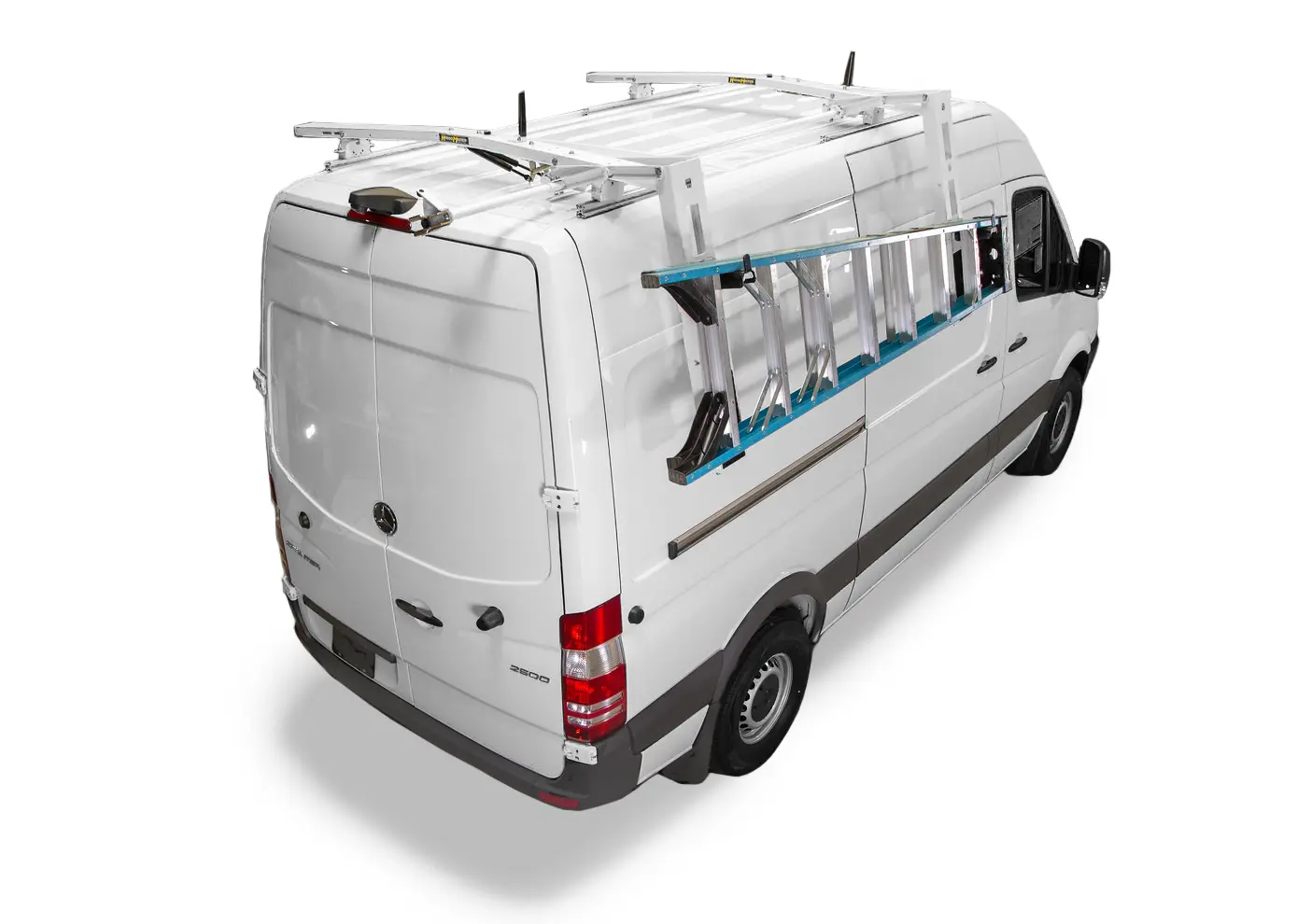
An exterior rack can move compatible ladders or approved long cargo out of the interior, helping preserve cargo-floor space and a clearer path through the van.
- Best for: Contractors, painters, roofers, electricians, telecom installers, and service technicians who regularly carry ladders.
- Option to compare: Drop-down racks may provide easier ladder access on taller vans, while fixed, clamp-and-lock, utility, or crossbar systems may suit other cargo and workflows.
- Confirm before ordering: Vehicle fitment, rack capacity, cargo type, mounting requirements, and total loaded vehicle height.

Van Flooring for Traction and Interior Protection
Commercial van flooring can provide a more consistent cargo surface while protecting the factory floor from daily wear. Traction, material, thickness, installation method, and compatibility vary by product.
- Best for: Work vans with frequent daily access, rolling equipment, or repeated loading and unloading.
- Workflow benefit: A properly selected floor can provide a more stable surface for walking and organizing equipment.
- Optional consideration: Compatible thresholds may help protect exposed floor edges and create a more finished installation.
Tank Racks and Bottle Restraints
Purpose-built tank racks and restraints are intended to limit movement of compatible cylinders or bottles during transport. The correct product depends on the container, vehicle, mounting location, and applicable transportation requirements.
- Best for: HVAC technicians, service vehicles, and other operations that transport compatible tanks or cylinders.
- Workflow benefit: Dedicated restraint locations can keep compatible containers separated from loose tools and general inventory.
- Important limitation: Never assume one holder fits every bottle or tank. Confirm container dimensions, restraint compatibility, mounting requirements, and applicable regulations.
How Should Different Trades Prioritize Their Van Setup?
Electricians
An electrician’s starting configuration may combine shelving, small-parts storage, wire storage, a partition, ladder storage, and clear access to frequently used toolboxes.
HVAC and Plumbing Technicians
HVAC and plumbing vans may need shelving, parts bins, approved tank or cylinder restraints, open floor space for larger equipment, and exterior storage for ladders or long materials.
Delivery and Mobile Service Operations
These operators may prioritize stable entry and exit, clear cargo-floor access, secure shelving, drawers, and repeatable storage locations that simplify loading and restocking.
Commercial Fleets
Fleets may benefit from testing one layout in actual service before repeating it across similar vehicles. Vehicle configuration and job role should still be confirmed for each installation.
Common Work Van Safety and Layout Mistakes
Leaving Frequently Used Tools Unsecured
Loose tools and supplies can move during normal driving. Use compatible shelves, drawers, bins, doors, dividers, or restraints according to the equipment and manufacturer instructions.
Blocking the Main Cargo-Area Path
A layout that requires technicians to step over tools or squeeze around equipment can create unnecessary movement. Preserve a practical path between the doors and frequently used storage.
Choosing Equipment Without Confirming Fitment
Vehicle year, model, roof height, wheelbase, door location, wall position, and existing equipment may affect compatibility. Confirm the exact vehicle application before ordering.
Ignoring Payload and Loaded Vehicle Height
Shelving, flooring, racks, tools, supplies, and cargo all contribute to vehicle weight. Roof equipment and cargo also increase total vehicle height. Check the complete setup against applicable vehicle and equipment limits.
Assuming Every Trade Needs the Same Package
A predetermined package may be a useful starting point, but the best configuration depends on the vehicle, inventory, trade, workflow, and available cargo space.
Who May Not Need Every Upgrade?
A van that rarely carries ladders may not need an exterior ladder rack. A vehicle carrying mostly large equipment may need more open floor space and less shelving. A technician who does not transport tanks or cylinders should not add restraints that do not support the actual workflow.
Start with the vehicle’s most frequent tasks and highest-priority risks. Add equipment only when it has a defined purpose and verified application.
Frequently Asked Questions
Can ladder racks carry items other than ladders?
Some utility racks, material racks, and crossbar systems may support approved cargo beyond ladders. Drop-down and clamp-and-lock systems are generally designed around ladder transport. Confirm the intended cargo and load rating for the exact rack.
Do van shelves include back panels?
It depends on the manufacturer and shelving model. Some shelves use back panels, while others are designed to follow or sit near the van wall. Review the product specifications and included components before ordering.
Do I need to install a commercial floor in my van?
Not every van requires an aftermarket floor. It may be worth considering when you want additional floor protection, a more consistent cargo surface, or compatibility with a particular mounting system.
Can one holder secure every bottle or tank size?
No. Holder dimensions, container compatibility, restraint method, and applicable transportation requirements vary. Confirm the exact bottle or tank application before ordering.
Are grab handles vehicle-specific?
Fitment and mounting requirements can vary. Confirm the vehicle, installation location, handle material, included hardware, and manufacturer instructions for the selected product.
Is professional installation required?
Installation requirements vary by product and vehicle. Some equipment may be suitable for experienced installers following the manufacturer’s instructions, while other installations may benefit from professional help. Do not assume all hardware or brackets are included unless the product listing confirms it.
Shop Work Van Equipment by Vehicle Type
- Chevrolet Express and GMC Savana Equipment
- Ford Transit: Low Roof, Mid Roof, or High Roof
- Ram ProMaster: Low Roof or High Roof
- Nissan NV: Standard Roof or High Roof
- Mercedes-Benz Sprinter: Standard Roof or High Roof
Related Work Van Equipment Guides
Need Help Planning a Safer Work Van?
The right equipment depends on your vehicle, trade, tools, cargo, access points, and daily workflow. Work Van Equipment can help you compare compatible products and build a practical configuration without requiring a predetermined package.
Tagged Products