HVAC Van Organization: How to Set Up Your Work Vehicle
An HVAC service vehicle carries more than a toolbox. Meters, gauges, replacement parts, refrigerant cylinders, recovery equipment and ladders all need a practical storage location.
Build your layout around the equipment you use most often. Keep everyday service tools accessible, separate small parts by type, secure larger equipment and preserve space for loading. We offer shelving, partitions, tank holders and ladder racks to help you create that setup.

Choose Ladder Storage Around Your Service Calls
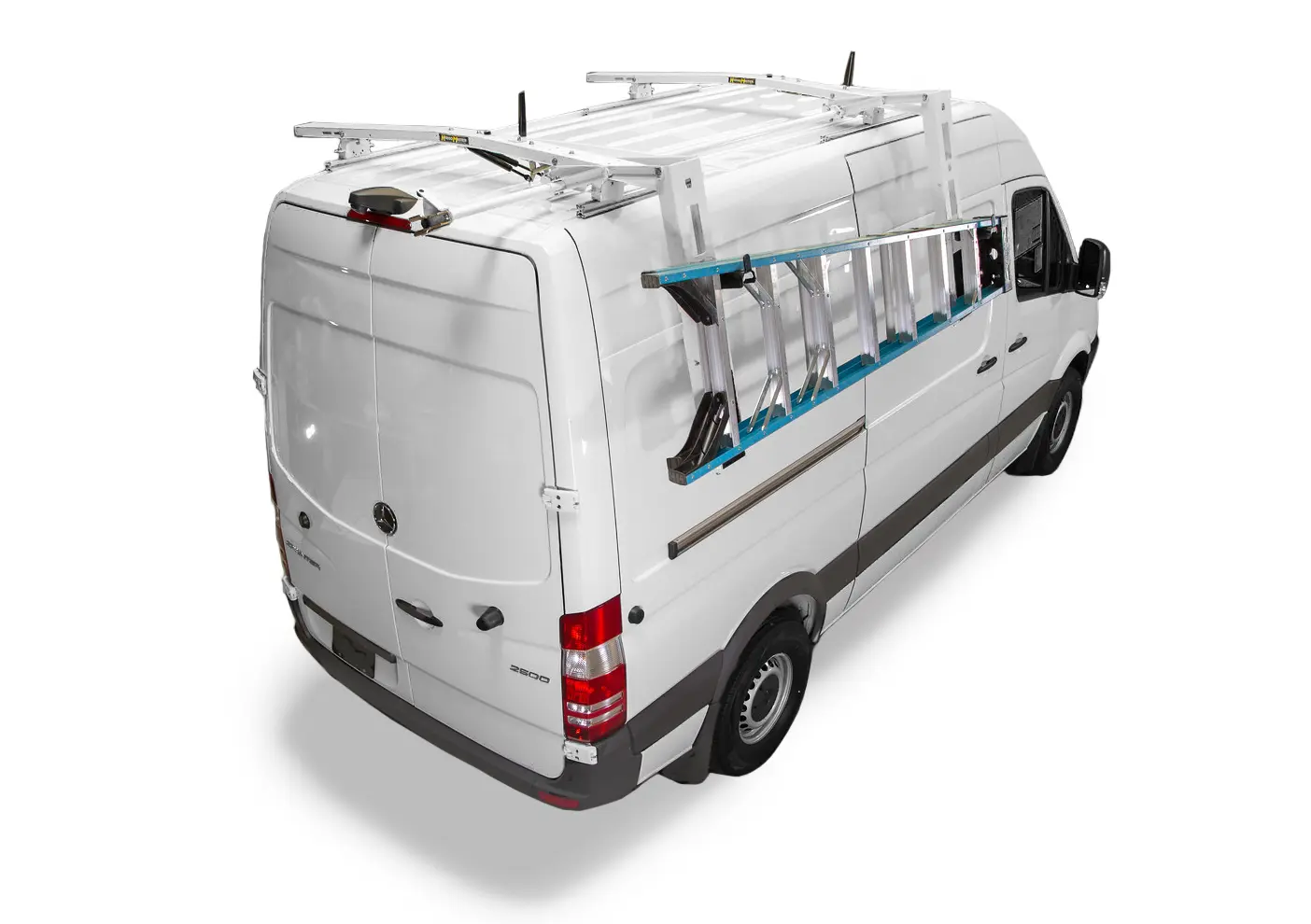
If your ladder comes off the vehicle several times a day, loading convenience matters. A drop-down rack lowers a compatible ladder toward the side of the van, reducing overhead reaching during handling.
A clamp-and-lock system may suit a lower van where you can comfortably reach the ladder and securing mechanism. Confirm the ladder type, dimensions and weight supported by the rack.
Also consider parking. Drop-down systems need operating clearance, and every roof-mounted setup changes your loaded vehicle height.
Match Your HVAC Equipment to the Right Storage
| Equipment | Storage to Consider | Planning Priority |
|---|---|---|
| Meters, gauges and diagnostic tools | Dedicated cases, drawers or enclosed compartments. | Quick access and protection from loose cargo. |
| Fittings, fasteners and small components | Labeled bins, divided drawers or removable organizers. | Separate parts and make stock levels easy to check. |
| Refrigerant cylinders | Compatible tank racks or holders with restraints. | Correct cylinder fit, orientation and mounting. |
| Recovery equipment and vacuum pumps | Suitably rated lower storage with appropriate restraints. | Weight distribution and loading access. |
| Ladders | A compatible exterior rack or interior carrier. | Daily handling, dimensions and clearance. |
Separate the Cabin from the Cargo Area
A properly fitted partition creates a barrier between the driver’s cabin and equipment in the cargo area. It forms part of the upfit; tools and materials still need suitable restraints.
Compare solid, perforated and window-equipped designs around your visibility and access needs. A solid partition can help limit air exchange between the cabin and cargo area, while a contoured design may provide more seat clearance.
Do not treat partition perforations as a substitute for any ventilation required by the products you transport. Check seat travel, door access and included latch hardware before ordering.


Give Refrigerant Cylinders a Dedicated Location
Loose cylinders can roll or shift in the cargo area. A compatible tank rack or holder provides a designated location and restraint system instead of relying on surrounding tools to hold cylinders in place.
Choose by cylinder dimensions, quantity and approved orientation. A rack intended for refrigerant cylinders should not automatically be used for other gas bottles.
Follow the rack installation instructions and the cylinder and refrigerant supplier’s handling guidance, including ventilation and temperature precautions. Check restraints regularly and keep valves protected from nearby equipment.
Choose Shelving Around Your Tools
Shelving helps move equipment off the floor and gives it a consistent storage location. Measure larger cases and service tools before choosing shelf depth and spacing.
Plan heavier equipment in suitable lower storage locations, following component ratings and the vehicle’s loading guidance. Keep frequently used items near a practical access point and leave room for equipment to be removed through the doors.
We offer steel and aluminum shelving options. Compare the actual unit weight, capacity and accessory compatibility rather than choosing on material alone.


Use Bins and Drawers to Control Small Parts
Separate fittings, fasteners and replacement components into labeled locations. Use labels that your technicians recognize, such as part type, size or application.
Removable organizers can carry selected parts to the job, while drawers and dividers help organize supplies that stay in the vehicle. Choose accessories compatible with your shelving.
Give returns, unused parts and items needing inspection their own location. This helps prevent them from being mixed back into ready-to-use stock.
See an HVAC Vehicle Setup in Action
Watch Zac from @QualityHVACR for an example of an HVAC vehicle setup. Use it as inspiration, then adapt the layout to your own van, equipment and service routine.
Build Your Setup in Practical Stages
You do not have to add every accessory at once. Start with a layout that handles your current equipment, then expand where daily use reveals a storage problem.
- Plan the foundation: Confirm vehicle fitment, partition needs, equipment dimensions and mounting locations.
- Organize the essentials: Add suitable shelving, restraints and dedicated storage for tools and cylinders you carry.
- Refine the workflow: Add compatible drawers, bins and ladder storage where they improve access.
- Review the load: Include the upfit, passengers, tools and supplies when checking available vehicle payload.
Frequently Asked Questions About HVAC Van Organization
What equipment should an HVAC van have?
Start with suitable storage for your actual tools, parts and larger equipment. Common additions include shelving, divided storage, a partition, compatible cylinder holders and ladder storage. The right combination depends on your services and vehicle.
Where should I store vacuum pumps and recovery equipment?
Choose accessible storage that supports the equipment’s weight and allows it to be restrained. Lower locations can help with handling and weight distribution, but the exact layout must follow the equipment and vehicle loading requirements.
Will any tank rack fit my refrigerant cylinders?
No. Confirm cylinder dimensions, quantity, approved orientation and the holder’s intended application. Follow both the rack instructions and the cylinder supplier’s handling guidance.
Should I choose steel or aluminum shelving?
Compare the specific shelving units rather than material alone. Unit weight, shelf capacity, dimensions, price and compatible accessories all affect the choice.
Is a drop-down ladder rack useful for HVAC work?
It can be useful if you load ladders frequently or operate a taller van. Check ladder fitment, weight limits and the space needed to operate the rack beside the vehicle.
Can I add bins and drawers to existing shelving?
Often, but compatibility varies. Confirm the shelving brand, model, dimensions and mounting requirements before choosing accessories. Send us those details if you need help.
Should I buy an HVAC package or individual components?
A package provides a starting configuration for a specific vehicle and trade. Individual components may suit an existing upfit or unusual equipment. We can help compare the included items with what you need.
Let Us Help You Organize Your HVAC Work Vehicle
Send us your vehicle’s year, make, model, roof height and wheelbase, along with the equipment you carry. Our Customer Service team can help compare packages and components, confirm fitment and prepare a quote.
Shop Shelving Packages ? Call (800) 533-7722Prefer email? Contact [email protected]
Tagged Products